
The last open day of the year for pilgrimage to the Buddha's skull relic at Niushou Mountain on National Day .
Sep 30, 2026
Nanjing,China, September 30, 2026 -- From October 1st to October 7th, 2026 , the Buddha's skull relic at Niushou Mountain will be open to the public for viewing (the last viewing of the year) . With the autumn breeze bringing blessings , we welcome you to climb Niushou Mountain, bask in its light, pray for good fortune, and share in the joy of Dharma, wishing you peace and health year after year .

Why is the Buddha's skull relic so revered?
The Buddha's skull relic is the true relic of the skull of Shakyamuni Buddha. According to historical records, after Shakyamuni Buddha's Nirvana and cremation, relics such as his teeth, fingers, and skull remained. Currently, the Buddha's skull relic enshrined at Niushou Mountain is the only one of its kind in the world.
Regarding this relic, more than a thousand years ago, the eminent Eastern Jin monk Faxian, on his journey to the West to seek Buddhist scriptures, recorded in detail his experience of gazing upon the Buddha's skull relic in the city of Hira in the Kingdom of Nagarjuna: "The bone is yellowish-white, four inches in circumference, with a raised top." Subsequently, countless eminent monks, including Song Yun and Huisheng of the Northern Wei Dynasty, and Xuanzang of the Tang Dynasty, traveled great distances just to see this sacred object. Xuanzang, in his "Great Tang Records on the Western Regions," exclaimed in awe that this Buddha's skull relic was "one foot and two inches in circumference, with clearly defined hair follicles," inspiring awe in all who saw it.
Why did the Buddha's skull relic appear in Nanjing?
Why did the Buddha's skull relic appear in Nanjing? It was no accident. Nanjing's status in the history of Chinese Buddhism can be traced back to the late Eastern Han Dynasty. At that time, Buddhism was first introduced to Jiangnan, and Jianchu Temple in Jinling became the first Buddhist temple in Jiangnan. During the Southern Dynasties, Jiankang (Nanjing) was already the national center of Buddhist and Zen culture. Du Mu's line "Four hundred and eighty temples in the Southern Dynasties" perfectly describes the flourishing state of temples in Jinling at that time.
For over a thousand years thereafter, various schools of Buddhism flourished and thrived in Nanjing. The Sanlun School, Tiantai School, Huayan School, Chan School, and many others all had intricate connections with Nanjing. The Buddhist capital of Jinling (Nanjing) thus gained widespread renown…
The Millennium Circulation of Sacred Relics
On July 18, 2008, a momentous event occurred in Nanjing that shocked the world. Archaeologists discovered the underground palace of the Northern Song Dynasty's Changgan Temple at the Ming Dynasty Great Bao'en Temple site in Nanjing. A stone casket unearthed bore a lengthy inscription entitled "Record of the Stone Casket Containing the Relics of the True Body Pagoda of Changgan Temple in Jinling," recording that the Ashoka Pagoda within the underground palace contained the Buddha's skull relic, other relics, and relics of various saints. The Nanjing Great Bao'en Temple site was named one of the "Top Ten Archaeological Discoveries in China in 2010."
According to historical records, in the fifth year of the Taiping Xingguo era of the Northern Song Dynasty (980 AD), the Indian monk Venerable Shihu brought the Buddha's skull relic from Sri Lanka to China and enshrined it in Changgan Temple (the predecessor of the Great Bao'en Temple) in Jinling. In the fourth year of the Dazhong Xiangfu era of the Northern Song Dynasty (1011 AD), during the reign of Emperor Zhenzong of Song, a gold coffin and silver outer coffin were made to house the relic, which was then placed inside the Seven-Jeweled Ashoka Pagoda and enshrined in the underground palace. On June 12, 2010, the Buddha's skull relic, which had been hidden in the Ashoka Pagoda for a thousand years, was revealed to the world. Its historical, cultural, and religious value is unparalleled.
Why is the Buddha's skull relic enshrined at Niushou Mountain?
- Geographical context: The convergence and sedimentation of the axis in landscape
Niushou Mountain boasts a natural landscape of "exquisite beauty and harmonious integration of mountains and water," occupying a unique position in Nanjing's "three axes and one line" landscape network. Among these, the "Six Dynasties Landscape and Historical Sites Line," stretching from Fuzhou Mountain in the north to Niushou Mountain in the south, extends along the Southern Dynasties Imperial Road, connecting the spirit and grandeur of Jinling (Nanjing) over a thousand years. Niushou Mountain is the southern concluding stroke of this cultural axis, embodying the essence of heaven and earth.
Meanwhile, Niushou Mountain, nestled in the southern suburbs of Nanjing, is far from the hustle and bustle, forming a tranquil and serene haven. Its secluded and peaceful mountain atmosphere, along with its solemn and sacred natural environment, perfectly matches the calm and dignified atmosphere required for the enshrinement of sacred objects.
- Cultural Heritage: Every step reveals a piece of history, and local customs become poetry.
Mountains and rivers hold the weight of history, and local customs and artifacts carry the weight of human culture. Surrounding Niushou Mountain are numerous historical sites, including Yue Fei's anti-Jin fortress, Zheng He Cultural Park, the Southern Tang Dynasty mausoleums, and cliff carvings. Every step reveals a piece of history, every glance spans a millennium. These historical sites echo the main culture of Niushou Mountain, constructing a rich and enduring tapestry of Nanjing's cultural landscape.
- Buddhist and Zen Origins: Niutou Ancestral Temple, a Zen Lineage for a Thousand Years
Nanjing is a Buddhist capital with a history of over a thousand years, and Niushou Mountain is an indispensable part of Nanjing's Buddhist and Zen cultural heritage.
As early as the Wei, Jin, and Northern and Southern Dynasties, Niushou Mountain had already begun its history of Buddhist and Zen cultural transmission. Many eminent monks built hermitages and practiced Buddhism amidst the serene and ethereal scenery of Niushou Mountain, allowing Buddhist and Zen culture to take root and flourish in this verdant landscape. During the early Tang Dynasty, Zen Master Farong founded an important branch of Zen Buddhism at Niushou Mountain—the Niutou School, also known as Niutou Chan. Its doctrines are considered to mark the true beginning of the Sinicization of Indian Zen. Niushou Mountain thus became one of the important origins of Chinese Zen Buddhism. For thousands of years since then, the Buddhist and Zen culture of Niushou Mountain has continued uninterrupted. Despite the vicissitudes of time, it has always been an important cultural activity center in the Nanjing area, attracting countless people to enjoy the scenery, make wishes and pray for blessings, and cultivate their minds, experiencing the unique tranquility and peace of the mountains.
The natural endowment of its landscape, the profound accumulation of its millennia-old culture, and the deep origins of its Zen Buddhist ancestral home—these three cultural traditions blend together to create Niushou Mountain, a blessed and auspicious place. The convergence of these karmic connections, perfectly aligned with its origins, makes Niushou Mountain the best place to enshrine the Buddha's skull relic.
As a national first-class cultural relic, the Buddha's skull relic is highly anticipated every time it is opened to the public for viewing.
Contact Info:
Name: Media Relations Of Office
Email: Send Email
Organization: Niushou Mountain Cultural Tourism Zone
Website: https://www.niushoushan.net/
Release ID: 89204805
In case of identifying any problems, concerns, or inaccuracies in the content shared in this press release, or if a press release needs to be taken down, we urge you to notify us immediately by contacting [email protected] (it is important to note that this email is the authorized channel for such matters, sending multiple emails to multiple addresses does not necessarily help expedite your request). Our dedicated team will be readily accessible to address your concerns and take swift action within 8 hours to rectify any issues identified or assist with the removal process. We are committed to delivering high-quality content and ensuring accuracy for our valued readers.
More News

House prosecution to present Duterte’s bank records within the week
MANILA, Philippines — The House prosecution panel said it intends to finally present Vice President Sara Duterte’s bank records before the Senate impeachment court within the week. House trial spokesperson Ace Barbers disclosed the timetable as prosecutors prepare to move deeper into the financial evidence under Article II. Article II covers Vice President Sara Duterte’s

MILF infighting leaves boy dead, man wounded in Maguindanao
COTABATO CITY — An 11-year-old boy was killed while a man was wounded after they were hit by stray bullets during an armed encounter between two rival groups of the Moro Islamic Liberation Front (MILF) in Shariff Aguak, Maguindanao del Sur, early Wednesday, a police official said. Major Joel Lebrilla, Shariff Aguak police chief, identified

NIA preparing to mitigate effects of El Niño – Palace
MANILA, Philippines — The National Irrigation Administration (NIA) and other concerned agencies are continuously preparing to ease the effects of the looming super El Niño, including the maintenance of irrigation systems and clearing operations on irrigation canals, Malacañang said Wednesday. Palace press officer Claire Castro made the assurance after the NIA outlined its mitigation action

BFAR studies octopus breeding for sustainable farming in Mimaropa
CALAPAN CITY, Oriental Mindoro — The Bureau of Fisheries and Aquatic Resources (BFAR) in Mimaropa is studying the reproductive biology of the octopus Octopus cyanea, locally known as “pugita,” to generate scientific data that could support sustainable fisheries management in the region, according to a social media post on Wednesday, Sept. 30. The assessment, which

Tongol: Impeachment ‘bullet-proof’ after SC petition dismissal
MANILA, Philippines — The Supreme Court’s swift dismissal of the petitions seeking to nullify the impeachment court’s Sept. 23 ruling on the 2/3 vote requirement needed to convict Vice President Sara Duterte proves that its interpretations and proceedings are “constitutionally bullet-proof.” That’s according to Senate impeachment court spokesperson Reginald Tongol. In a statement, Tongol said the impeachment court acknowledges

Prosec hails SC dismissal of pleas vs impeach court voting threshold
MANILA, Philippines — House prosecutor and Bicol Saro Party-list Rep. Terry Ridon on Wednesday hailed the dismissal by the Supreme Court of the petitions challenging the Senate Impeachment Court’s ruling on the voting threshold to convict Vice President Sara Duterte. Ridon emphasized that their work on impeachment proceedings will continue. The SC has junked separate

1 militiaman dead, 2 soldiers wounded in Negros Occidental attack
BACOLOD CITY—A government armed auxiliary member was killed, and two soldiers were wounded after an armed group attacked military personnel in Escalante City, Negros Occidental, on Tuesday afternoon, the Army reported Wednesday. Members of the 79th Infantry Battalion’s Mobile Community Support and Sustainment Program (MCSSP) were conducting a security patrol in Sitio Bautista, Barangay Malasibog,

No request for passport fee hike, says printing agency
MANILA, Philippines — APO Production Unit Inc., the printing agency for Philippine passports, clarified on Wednesday that it did not request an increase in passport fees. Instead, its president, Atty. Gil Carlos Puyat, told the Senate finance subcommittee that the agency had asked for a government subsidy to offset passport printing costs without passing the

Angara confirms: Reported Sultan Kudarat school shooting ‘false alarm’
MANILA, Philippines — The reported shooting incident at Isulan National High School in Sultan Kudarat province on Wednesday was a “false alarm,” Education Secretary Sonny Angara confirmed. Earlier, Governor Datu Pax Ali S. Mangudadatu said in a social media post that there was an alleged shooting incident at the school, but no confirmed reports of injuries or
3 House measures on legal, financial aid for OFWs OKd on 2nd reading
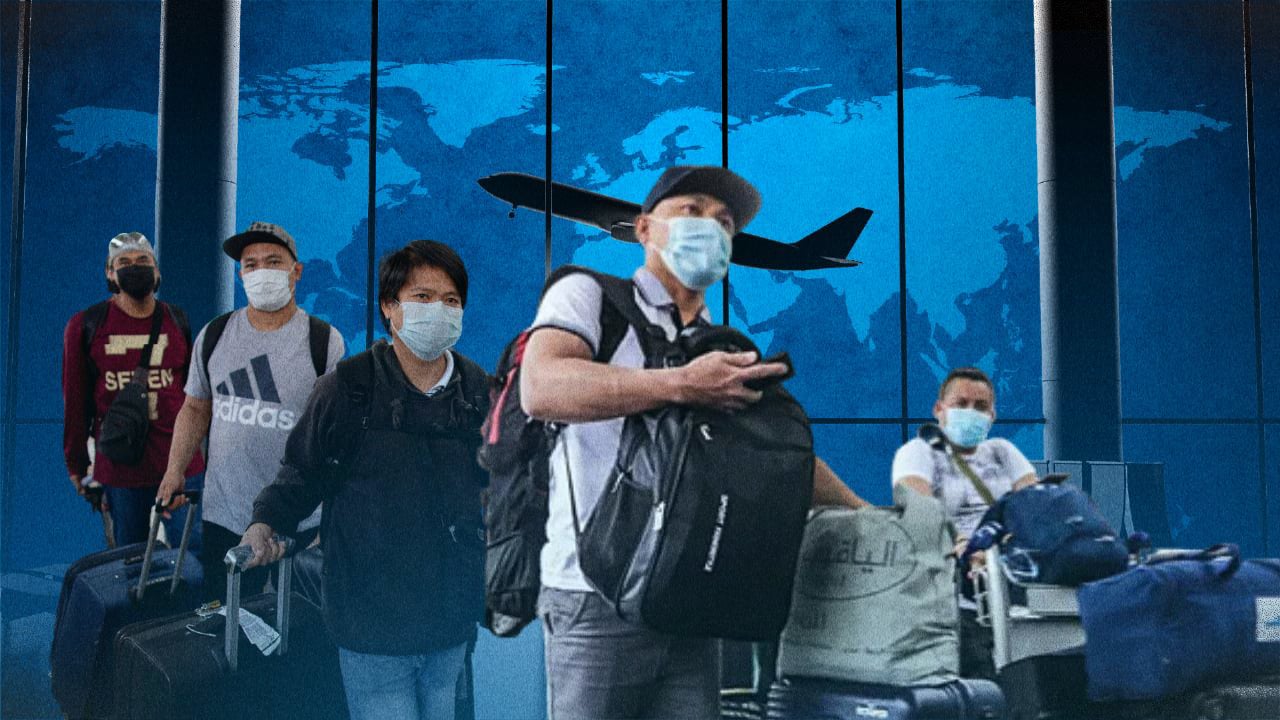
MANILA, Philippines — The House of Representatives on Wednesday approved on second reading three bills seeking to provide further legal and financial protection to overseas Filipino workers (OFWs). During Wednesday’s session, lawmakers in a voice vote approved House Bill (HB) 9462, HB 9805, and HB 9806, all sponsored by Agimat party-list Rep. Bryan Revilla, chairperson
Giant buko pie showcased at Nueva Vizcaya town feast
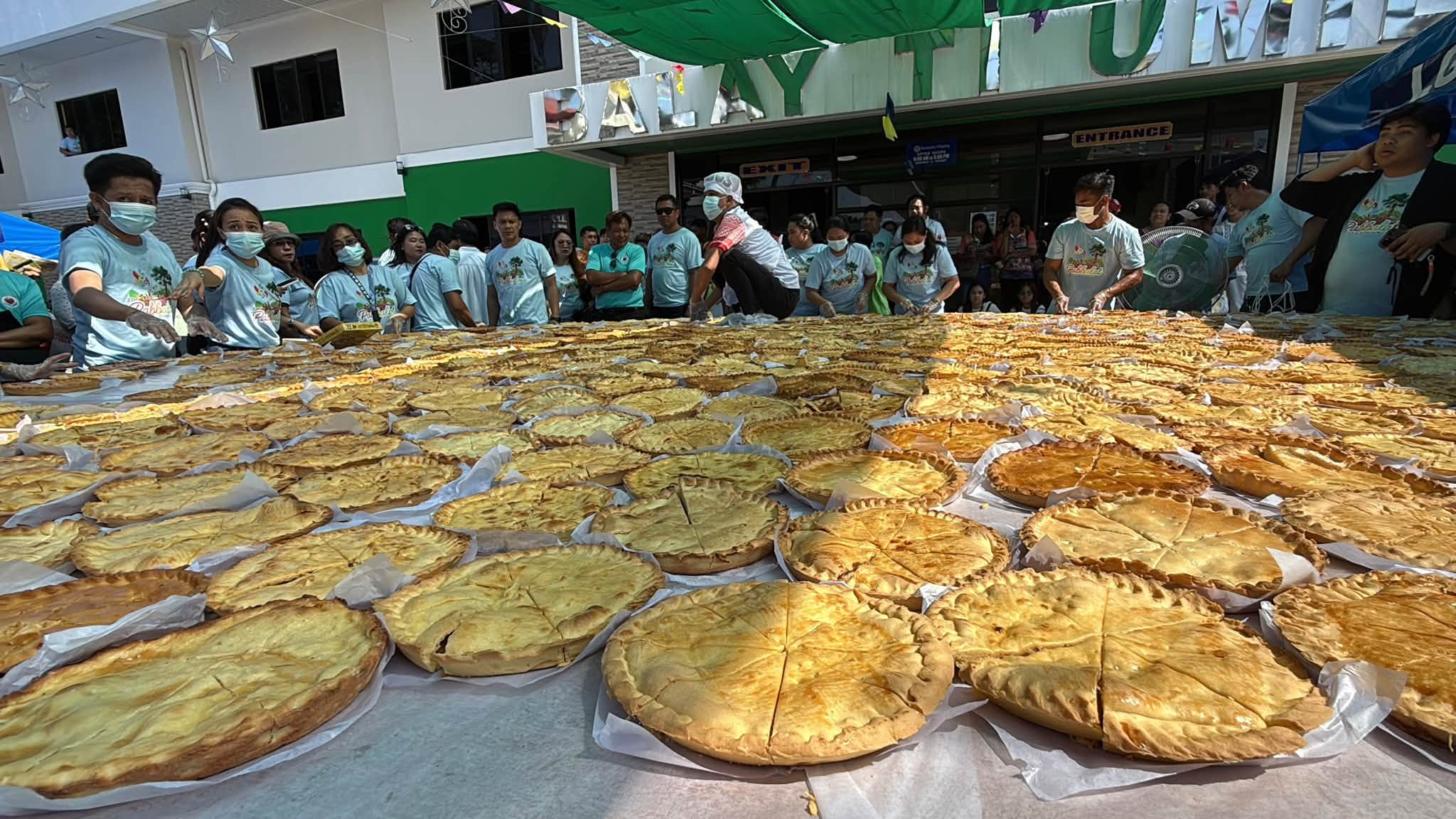
BAGABAG, Nueva Vizcaya — Bagabag town showcased a giant ‘buko’ (coconut) pie display made up of 480 standard-sized pies during the 23rd Pabbalat Festival and its 285th Founding Anniversary on Tuesday. Bagabag Mayor Benigno Calauad told reporters that the giant display of buko pies, which had a 15-meter diameter, was given free to residents who

NUP pleads for end to budget retribution vs defiant lawmakers
MANILA, Philippines — The National Unity Party (NUP) on Wednesday called for an end to withholding district funding as political punishment for lawmakers who break ranks and do not toe the line, saying the practice is a form of retribution that ultimately harms their constituencies. “The practice of punishing districts and communities for any opinions
YOUR NEWS, OUR NETWORK.
Do you have Great News you want to tell the world?
Be it updates about your business or your community, you can make sure that it’s heard by submitting your story to our network reaching hundreds of news sites across 6 verticals.