
How Do You Select Screw Elements for Glass-Fiber, Talc, or CaCO₃-Filled Compounding?
Nov 13, 2026
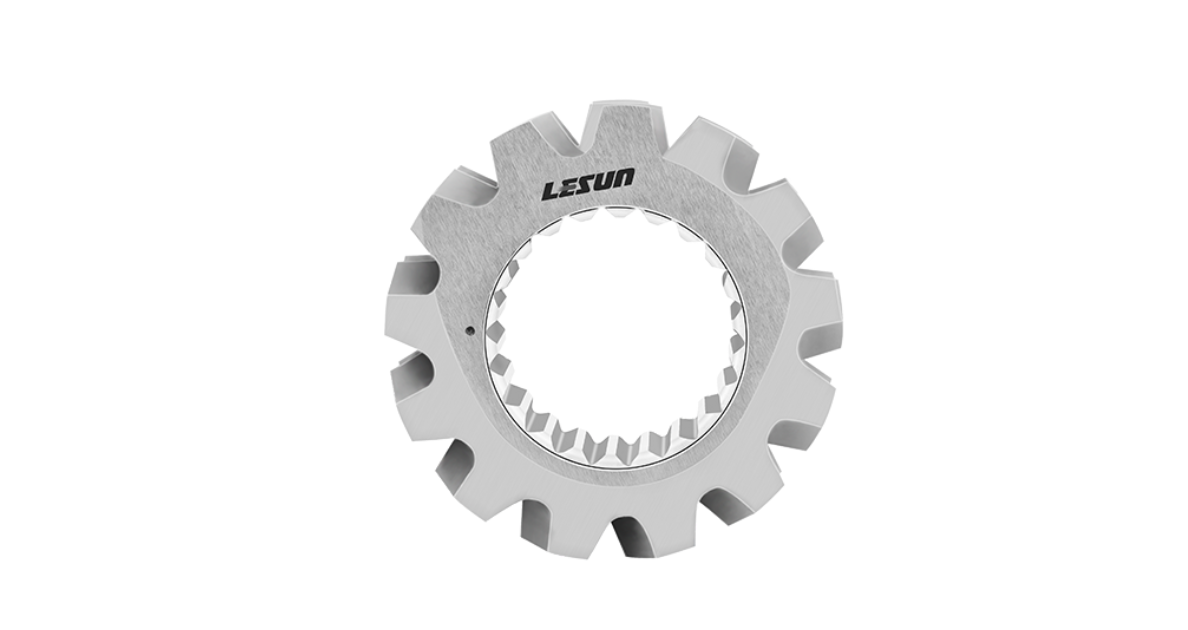
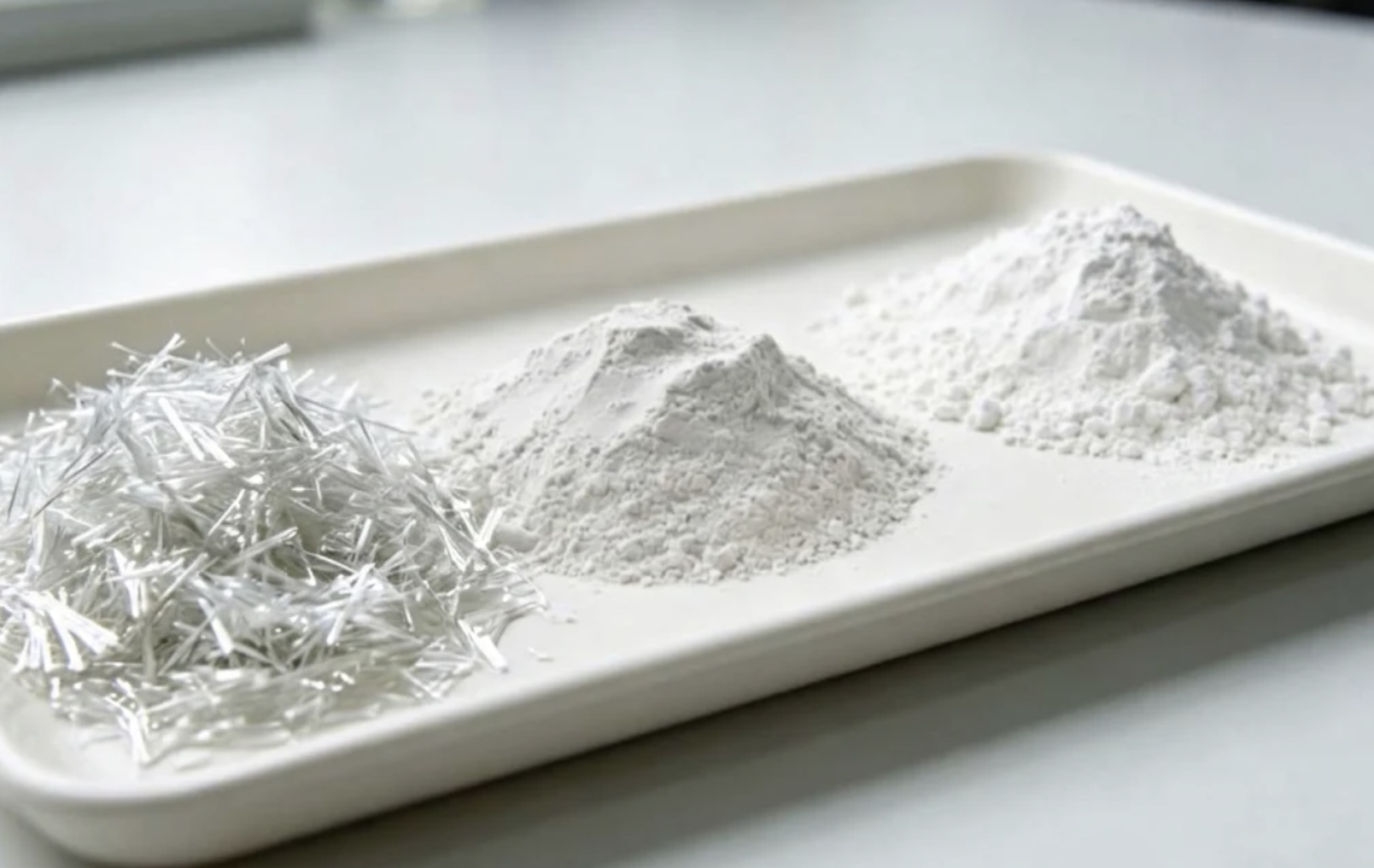
Nanjing, Jiangsu Nov 12, 2026 (Issuewire.com) - How Do You Select Screw Elements for Glass-Fiber, Talc, or CaCO-Filled Compounding? Filled compounding is often discussed as a single category, yet the engineering realities differ sharply from one filler to another. A configuration tuned for glass-fiber-reinforced polyamide will underperform on a talc-filled polypropylene, and both may collapse quickly under the abrasion of high-loading calcium carbonate. Choosing Screw Elements for Glass-Fiber, Talc, or CaCO-Filled Compounding (https://www.lesunscrew.com/products/kneading-screw-elements/) requires treating each filler as a distinct engineering problem with its own priorities -- length preservation for glass fiber, aggregate break-up for talc, and abrasion resistance for calcium carbonate. This guide walks through the differences and shows how element geometry, sequence, and material selection shift with each filler type. This guide examines the differences and explains how screw-element geometry, sequence, and material selection can be adapted to each filler system. What Makes Filler-Specific Screw Design Different from Generic High-Filler Configuration? Grouping all fillers under a single "high-filler" heading hides the differences that actually drive screw design. Glass fiber is mechanically fragile and length-critical; excessive shear reduces aspect ratio and, with it, tensile and impact performance. Talc arrives as platelet-shaped aggregates that must be broken apart without generating excessive heat, since talc itself has poor thermal conductivity and traps heat inside the melt. Calcium carbonate is chemically stable and easy to disperse, but its abrasive behavior at high loading dominates every other concern. These distinct behaviors mean that a single configuration rarely serves all three well. Designing for one filler often compromises performance with another -- which is why filler identity, not just filler percentage, should guide element selection. Grouping all fillers under a single "high-filler" category can obscure the material characteristics that actually determine screw design. Glass fiber is sensitive to mechanical breakage, and excessive shear or restrictive mixing sections can reduce fiber length and aspect ratio, potentially affecting the mechanical performance of the final compound. Research has demonstrated that screw configuration, particularly the use of intensive kneading sections after fiber addition, can significantly influence the resulting fiber-length distribution. Talc presents a different challenge. Its lamellar particle morphology and tendency to form agglomerates require sufficient dispersive and distributive mixing to achieve uniform incorporation into the polymer matrix. At the same time, excessive shear intensity or residence time can increase melt temperature and promote polymer degradation, making the balance between dispersion and thermal history important. Studies on talc-filled polypropylene have specifically demonstrated the influence of kneading-element geometry and screw operating conditions on extrusion behavior and compound properties. Calcium carbonate can also be processed at very high filler concentrations, particularly in highly filled compounds and masterbatches. In these applications, filler feeding, dispersion, pressure build-up, and mechanical wear must all be considered together. These differences mean that a single configuration rarely provides the optimum balance for all three fillers. Filler type, loading, particle characteristics, polymer rheology, and target throughput should therefore be considered together when selecting screw elements. How Should Screw Elements Be Selected for Glass-Fiber-Reinforced Compounding? Glass fiber compounding follows a clear principle: introduce the fiber late, and treat it gently after that point. Side-feeding downstream of the melting zone keeps fibers out of the high-shear dispersion section, where they would otherwise fracture. Once the fiber enters the melt, the remaining screw length must distribute it without further length loss. Kneading blocks after the side feed should use narrow discs and moderate offset angles. Wide, high-offset blocks generate the shear peaks that break fibers most aggressively. Distributive mixing elements such as SME or ZME often replace additional kneading, since they achieve uniform dispersion through flow redirection rather than shear. Conveying elements downstream should adopt longer pitch and lower fill, allowing fibers to travel with the melt rather than tumble against restrictive geometry. The trade-off is unavoidable: preserving fiber length limits how aggressively distribution can be pushed, so screw designers must accept a residual gradient in fiber uniformity in exchange for retained mechanical performance. Glass-fiber compounding generally follows a clear processing principle: melt the polymer sufficiently before introducing the reinforcing fiber, then minimize unnecessary fiber breakage during downstream conveying and mixing. For chopped-glass-fiber compounds, side feeding downstream of the primary melting section is a widely used process arrangement. For example, specifically describes side feeding chopped glass fibers into the polymer melt after the polymer and additives have been plasticized and homogenized. Once the fiber enters the melt, the downstream screw configuration must provide adequate distributive mixing while limiting excessive dispersive stress. Intensive kneading sections can improve incorporation and homogenization, but experimental work has shown that kneading blocks after glass-fiber addition can also produce significant fiber shortening. Consequently, the objective is not simply to maximize mixing intensity, but to obtain the required fiber distribution with the lowest practical level of fiber damage. Depending on the formulation and machine geometry, narrower or less intensive kneading sections, longer-pitch conveying elements, and specialized distributive mixing elements can be used downstream of the fiber feed. The appropriate combination depends on fiber content, initial fiber length, polymer viscosity, throughput, screw speed, and the specific screw profile. The fundamental trade-off remains the same: more intensive mixing can improve homogenization but may accelerate fiber shortening. Screw design therefore has to balance fiber-length retention against the required degree of dispersion and distribution rather than pursuing maximum shear. How Should Screw Elements Be Selected for Talc-Filled Compounding? Talc introduces a different set of challenges. Its low bulk density often causes bridging at the feed throat, particularly at higher loadings. Long-pitch conveying elements -- or SSK elements for stubborn cases -- help maintain intake. Once inside, talc's platelet aggregates require dispersion, but the polymer around them heats up quickly because talc conducts heat poorly. Moderate reverse kneading blocks provide the shear needed to separate platelet stacks without overloading the thermal budget. Excessive dispersion, by contrast, raises melt temperature rapidly and risks degradation of heat-sensitive resins such as polypropylene copolymers. Distributive mixing elements -- SME or TME -- refine platelet distribution after the primary dispersion zone. Venting also matters more than it might appear: fine talc powders carry entrapped air that must be removed before pressure build-up, so vent placement and barrel selection deserve attention. Throughout the screw, thermal control drives most element decisions, since talc rewards patience over aggression. Talc introduces a different set of challenges. Fine talc powders can have relatively poor flowability and may require appropriate feeding equipment and feeding-zone geometry, particularly at higher concentrations. Feeding technology documentation emphasizes that powder characteristics such as flowability, bridging tendency, and bulk behavior must be considered when selecting feeding systems. Once introduced into the polymer melt, talc must be sufficiently dispersed to break down agglomerates and achieve a uniform filler distribution. Its lamellr structure makes the balance between dispersive and distributive mixing particularly important. Research on talc-filled polypropylene has shown that changes in kneading-element spacing and angular arrangement can influence the resulting extrusion process and material properties. Moderate-intensity kneading sections can therefore be used where additional dispersive mixing is required, while downstream distributive mixing elements can improve the uniformity of filler distribution without relying exclusively on high shear. The precise combination should be determined according to filler loading, particle-size distribution, polymer viscosity, throughput, and required melt temperature. Thermal management is also important. Excessive mechanical energy input can raise melt temperature, particularly when high screw speeds, high filling ratios, or restrictive mixing sections are combined. For temperature-sensitive polymer systems, the screw configuration should therefore provide the required dispersion without introducing unnecessary specific mechanical energy. Venting may also be required depending on the feeding method, filler moisture, entrained air, and formulation. Rather than treating venting as an inherent requirement of all talc compounds, the vent position and barrel configuration should be determined from the actual devolatilization and feeding conditions. How Should Screw Elements Be Selected for Calcium Carbonate-Filled Compounding? Calcium carbonate compounds routinely operate at loadings above 60 percent, and some masterbatch formulations push higher still. Dispersion at these levels demands a stronger sequence -- typically forward kneading blocks for initial break-up, followed by reverse kneading blocks to complete agglomerate reduction. CKE or ZME elements often close the mixing sequence, providing final homogenization at high loading without over-shearing the melt. Surface treatment of the filler also matters. Stearate-coated calcium carbonate disperses more easily and reduces shear demand, allowing softer configurations. Uncoated grades require more mechanical work and generate more heat during dispersion. Yet across both cases, one factor dominates the design: wear. At high loading, calcium carbonate behaves as a three-body abrasive between screw and barrel, and abrasion -- not dispersion -- usually determines when a configuration needs to be rebuilt. Calcium carbonate compounds can operate at substantially higher filler loadings than many conventional filled systems, particularly in highly filled compounds and masterbatch applications. At these concentrations, screw design must address not only dispersion but also feeding stability, torque demand, pressure development, thermal management, and component wear. We identifies CaCO as a major powdered additive for highly filled compounding and illustrates process configurations in which calcium carbonate is introduced through dedicated feeding systems. The screw profile therefore needs to provide sufficient mechanical work to incorporate the mineral filler and break down agglomerates, while avoiding unnecessary over-shearing. Depending on the formulation, this may involve a combination of forward conveying, kneading, and specialized mixing elements rather than a fixed sequence that applies to every CaCO compound. The surface treatment and particle characteristics of the calcium carbonate also influence the required mixing intensity. Coated grades, such as stearate-treated CaCO, can generally show different wetting and dispersion behavior from untreated grades. Consequently, the same screw configuration should not automatically be transferred between different filler grades or formulations without considering their surface characteristics and loading levels. At high mineral loading, however, wear becomes a major design consideration. Calcium carbonate is a mineral filler and can contribute significantly to abrasive wear, particularly when high concentrations, high throughput, and high screw speeds are combined. The actual wear rate depends on particle size, morphology, hardness, filler concentration, screw speed, throughput, clearance, and the selected material system. For demanding formulations, screw and barrel materials therefore need to be selected together with the process configuration rather than treated as separate decisions. How Does Filler Type Determine Screw Material and Surface Treatment? Filler chemistry and morphology decide which steel grade should sit under each element. Glass fiber acts as a two-body abrasive against screw surfaces, and hardened tool steels or powder-metallurgical HIP grades give the best service life in fiber-handling zones. Talc, being softer and less angular, imposes moderate wear, and nitrided tool steels often suffice for standard formulations. Calcium carbonate at high loading is the most demanding case: PM-HIP steels for elements and bimetallic linings for barrels remain the practical standard. Selecting the right grade requires more than a hardness rating. Toughness matters in impact-loaded zones, particularly around reverse kneading blocks where mechanical shocks concentrate. A deeper discussion of how tensile and impact properties of metallic materials (https://www.lesunscrew.com/blog/tensile-and-impact-properties-of-metallic-materials-engineering-applications/) inform component design can help engineers weigh hardness against fracture resistance when specifying wear-resistant grades. Filler characteristics have a direct influence on the required wear-protection strategy. Glass fibers can cause significant abrasive wear, particularly in regions exposed to continuous fiber loading and conveying. For example, specifies nitrided steel for standard screw elements while offering high-alloy wear-protected materials for more demanding applications. For glass-fiber-reinforced compounds, hardened tool steels and powder-metallurgical wear-resistant grades may be appropriate where extended service life is required. Talc is generally less aggressive than glass fiber or some other hard mineral fillers, although high filler loading can still produce measurable abrasive wear. Calcium carbonate at high concentration can likewise require enhanced wear protection, particularly in continuous high-throughput applications. Material selection should not be based on hardness alone. Toughness, corrosion resistance, operating temperature, impact loading, and the specific location of the element within the screw configuration also need to be considered. Kneading and reverse elements can experience different mechanical loading from conveying elements, while chemically aggressive formulations may require a corrosion-resistant material system in addition to abrasion resistance. A deeper discussion of how tensile and impact properties of metallic materials (https://www.lesunscrew.com/blog/tensile-and-impact-properties-of-metallic-materials-engineering-applications/) influence component design can help engineers evaluate the balance between hardness, wear resistance, toughness, and fracture resistance when specifying screw-element materials. How Can One Screw Platform Be Reconfigured Across Different Filler Systems? A well-designed segmented shaft supports multiple filler families with limited hardware change. What shifts most between filler types is the position of the side feed, the length of the dispersion zone, and the choice of mixing element in the homogenization stage. Conveying elements in the feeding and pressure-building zones often remain constant. For a plant running glass-fiber, talc, and calcium carbonate formulations on the same base machine, modular reconfiguration is far more economical than dedicated shafts. Element inventories can be planned around shared conveying sections, while filler-specific kneading and mixing elements are swapped in and out as production shifts. This flexibility is one of the main reasons segmented twin-screw designs replaced fixed-geometry screws in modern compounding. A properly designed segmented screw system can support multiple filler families with relatively limited hardware changes. he most significant changes are usually associated with the feeding position, melting and plasticizing section, mixing intensity, dispersion zone, and downstream homogenization section, rather than requiring the entire screw to be redesigned. Conveying elements in the feeding and pressure-building zones can often be shared, while filler-specific kneading and mixing elements can be changed according to the formulation. For glass-fiber compounds, the downstream configuration may prioritize fiber-length retention. Talc compounds may require a different balance between dispersive and distributive mixing, while highly filled calcium carbonate formulations may place greater emphasis on feeding capacity, torque management, dispersion, and wear resistance. This modularity is a fundamental advantage of segmented co-rotating twin-screw compounders. The process section as a modular system in which screw elements can be individually configured to establish conveying, plasticizing, mixing, homogenizing, devolatilizing, and pressure-building zones. For a plant producing glass-fiber, talc, and calcium-carbonate compounds on the same base machine, maintaining shared conveying elements while exchanging selected mixing and kneading elements can provide a practical balance between process flexibility, inventory cost, and changeover time. How Does Lesun Screw Support Filler-Specific Configuration Design? Executing a filler-aware selection strategy requires a supplier able to deliver the full range of elements in the right material grades. Lesun Screw (https://www.lesunscrew.com/company-profile.html) (Nanjing Lesun Screw Co.,Ltd.), based in Nanjing, produces conveying, kneading, and mixing elements across the geometries described above, and offers each in multiple wear-resistant material options. Powder-metallurgical HIP steels serve high-abrasion calcium carbonate applications; nitrided tool steels handle talc and general mineral filling; corrosion-resistant grades support formulations containing reactive coupling agents or halogenated components. Nanjing Lesun Screw Co.,Ltd. also supports customers with configuration advice for glass-fiber, mineral-filled, and hybrid formulations, matching element sequence and material selection to the specific filler chemistry involved. Compatibility with major twin-screw platforms -- Coperion, Leistritz, KraussMaffei, JSW, Berstorff, and leading domestic brands -- allows recommended configurations to be implemented without machine modification, and side-feed adaptations follow standard OEM interfaces. Executing a filler-specific screw-selection strategy requires a supplier capable of combining different element geometries with appropriate material systems. Lesun Screw (https://www.lesunscrew.com/company-profile.html) (Nanjing Lesun Screw Co., Ltd.) manufactures conveying, kneading, and mixing elements in different geometries and material grades for demanding compounding applications. For glass-fiber-reinforced compounds, wear-resistant materials can be applied to the sections exposed to higher abrasive loading. For talc-filled formulations, the material and geometry can be selected according to filler concentration, particle characteristics, and required mixing intensity. For highly filled calcium carbonate applications, enhanced abrasion-resistant material systems can be considered for the screw elements and corresponding barrel wear surfaces. Material selection should be coordinated with the screw configuration rather than treated as an independent upgrade. The appropriate combination depends on filler type, loading level, polymer matrix, throughput, screw speed, temperature, residence time, and the expected wear mechanism. Lesun Screw also supports screw-element supply for major twin-screw extruder platforms, including Coperion, Leistritz, KraussMaffei, JSW, Berstorff, and leading domestic machines, allowing filler-specific screw configurations to be implemented on existing segmented screw systems without changing the basic extruder platform. Conclusion Selecting screw elements for filled compounding is not a single decision but a set of parallel ones, guided by the specific challenge each filler introduces. Glass fiber demands length protection through gentle downstream handling. Talc requires balanced dispersion under tight thermal control. Calcium carbonate places wear resistance ahead of nearly everything else. Aligning element geometry, sequence, and material with the filler at hand -- rather than defaulting to a generic high-filler layout -- produces compounds with better properties and screws with longer service life. Additional product information and configuration references are available at https://www.lesunscrew.com/. Glass fiber places particular emphasis on fiber-length retention and controlled downstream mixing. Talc requires a balanced approach to agglomerate dispersion, distributive mixing, and thermal management. Highly filled calcium carbonate compounds place increasing emphasis on feeding stability, dispersion, torque management, and wear resistance. The most effective approach is therefore not to apply a generic "high-filler" screw configuration, but to align element geometry, screw sequence, processing conditions, and material selection with the actual filler system and production target. Additional information on screw elements and application-specific configuration support is available from Lesun Screw.
Source :Lesun Screw
This article was originally published by IssueWire. Read the original article here.
More News

Super Lotto 6/49, Lotto 6/42 draw results on Thursday, Nov. 26
MANILA, Philippines—No bettor won the jackpots in the Super Lotto 6/49 and Lotto 6/42 draws on Thursday, Nov. 26, 2026, according to the Philippine Charity Sweepstakes Office. Super Lotto 6/49 draw result: 04-41-12-14-07-39 Jackpot prize: ₱139.61 million Lotto 6/42 draw result: 05-09-17-20-39-01. Jackpot prize: ₱10.09 million Minor games The results of the other lottery draws

Catholic maritime ministry plans expanded port visit for seafarers and fishers support
A ministry that caters to the concerns of seafarers, fishers, and their families has announced plans to expand its pastoral visits to more local and international ports, CBCP News reported.

Couple shot dead in Bukidnon by one of victim’s ex-partner
VALENCIA CITY, Bukidnon — A couple was shot dead allegedly by the former live-in partner of one of the victims in Bukidnon on Wednesday evening, November 25, police said. The Impasugong police station said that a 43-year-old woman and her 52-year-old live-in partner were shot dead inside their home in Sitio Ulayanon, Barangay Kalabugao, around

Dangerous heat index hits 5 areas on Thursday
MANILA, Philippines — A dangerous heat index gripped five areas on Thursday as the El Niño phenomenon continues to affect the country, according to the Philippine Atmospheric, Geophysical and Astronomical Services Administration (Pagasa). The highest heat index for the day was recorded in Dipolog, Zamboanga del Norte and Puerto Princesa, Palawan which peaked at 43°C,

Senators warn agency heads: No show, less budget
MANILA, Philippines — Senators on Thursday warned heads of government agencies that their offices may suffer budget reductions if they fail to attend budget deliberations. The warning came as senators gave leeway to Philippine Sports Commission Chairperson Patrick “Pato” Gregorio, who missed the debates for the agency’s P1.9-billion proposed 2027 spending plan due to an

INQToday: OVP budget interpellation lasts just 2 minutes
MANILA, Philippines — Here are the top INQToday stories for Thursday, Nov. 26, 2026, as of 6. p.m. OVP budget interpellation lasts just 2 minutes, with no questions asked Without any questions from lawmakers, the Senate terminated the period of interpellation on the proposed P785.2-million budget of the Office of the Vice President (OVP). VP’s

Impeach court subpoenas BOC exec, Cale88 ex co-owner as witnesses
MANILA, Philippines — The Senate impeachment court on Thursday confirmed that it has served subpoenas on two witnesses named by Vice President Sara Duterte’s defense team, including a Bureau of Customs (BOC) official and a former co-owner of Cale88 Foods Corp., ahead of next week’s hearings. Senate impeachment court spokesperson Regie Tongol said Presiding Officer

Adiong tells Meta: Fake news is personal, impacts us, families
MANILA, Philippines — While social media companies like Meta may view disinformation and misinformation as issues that can be addressed through fact-checking, Lanao del Sur Rep. Zia Alonto Adiong reminded these firms that such activities have personal consequences for their victims, affecting not only individuals but also their families. During a hearing of the House of

A 6-hour trek to deliver aid, hope to Bukidnon Lumad pupils
SAN FERNANDO, Bukidnon — A municipal outreach team hiked for six hours through slippery mountain trails to deliver school supplies, slippers, and hot meals to 110 pupils from Indigenous Peoples (IP) communities in two remote hinterland schools in this town. The beneficiaries—composed of Tigwahanon, Matigsalug, and Manobo learners—are enrolled at Sil-angon Mission School in Sitio

PR group pushes ethics, training vs AI disinformation, trolls
PROSPERIDAD, Agusan del Sur — With gadgets and social media making it effortless to publish without checking facts, the Public Relations Society of the Philippines (PRSP) is pushing ethics rules, training, and youth outreach to counter black propaganda, paid troll operations, and AI-driven misinformation while acknowledging limits on who the group can police. READ: 7

Mindanao celebrates peace week with prayers, calls for solidarity, unity
COTABATO CITY – Thousands of christians, muslims and Indigenous Peoples (IPs) across the southern Philippines on Thursday joined the opening of the annual Mindanao Week of Peace (MWOP), with calls for solidarity, unity, and just and lasting peace echoing through their different activities. Themed “Many Journeys, One Humanity: Building Peace,” the 2026 MWOP will run

House panel shoots down coffee excise proposal
MANILA, Philippines — Any proposal to tax coffee products is already considered “dead on arrival” at the House of Representatives, Marikina Rep. Miro Quimbo said on Thursday. In a message to reporters, Quimbo said coffee cannot be subjected to an excise tax because such policy is primarily imposed on products to discourage consumption behaviors that may be
YOUR NEWS, OUR NETWORK.
Do you have Great News you want to tell the world?
Be it updates about your business or your community, you can make sure that it’s heard by submitting your story to our network reaching hundreds of news sites across 6 verticals.