
How Different Types of Screw Elements Affect Twin-Screw Compounding Quality?
Nov 13, 2026
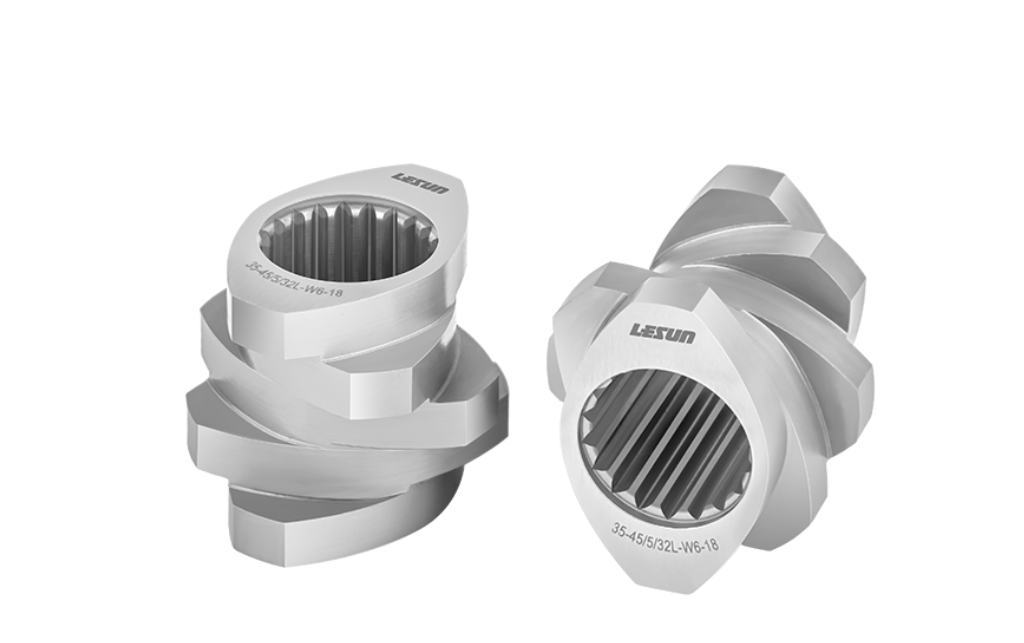
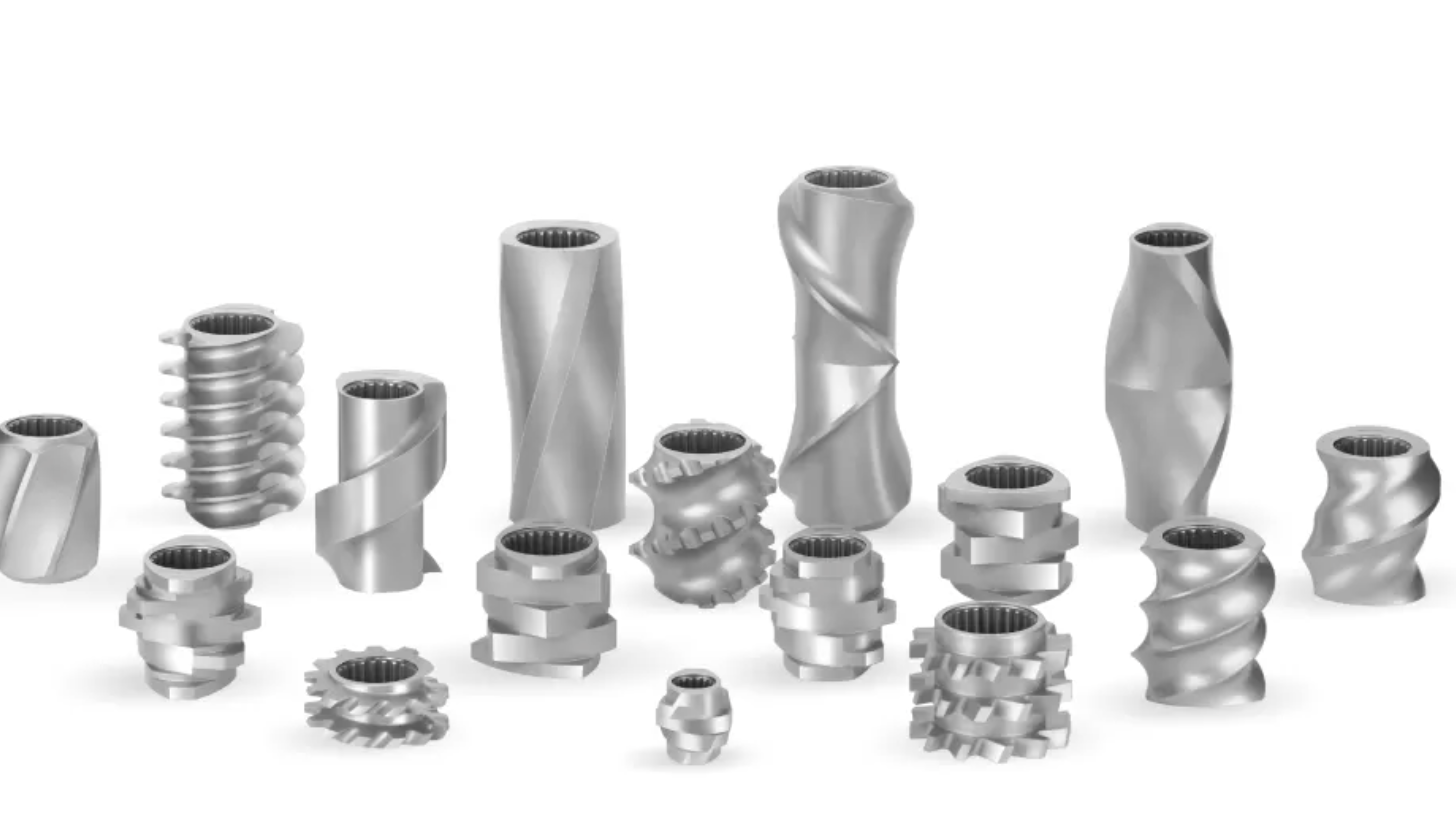
Nanjing, Jiangsu Nov 12, 2026 (Issuewire.com) - How Different Types of Screw Elements Affect Twin-Screw Compounding Quality? In twin-screw compounding, the screw shaft is rarely a single tool. Instead, it functions as a modular assembly where each segment performs a distinct mechanical role. The Different Types of Screw Elements (https://www.lesunscrew.com/products/screw-element/) installed along the shaft -- conveying, kneading, and specialized mixing geometries -- directly govern throughput, shear intensity, and residence time. Because these three variables translate into measurable product attributes such as filler dispersion, color uniformity, and thermal degradation, element selection becomes a quality decision rather than a routine assembly step. This article examines how geometric parameters at the element level shape the final compound. In twin-screw compounding, the screw shaft serves as the mechanical foundation of a modular screw assembly, providing the structural support, positioning, and torque transmission required for individual screw elements to perform their respective processing functions. Rather than acting as a single processing element, the shaft carries a sequence of modular elements with different geometries and functions, including conveying, kneading, and specialized mixing elements, which together define the screw configuration and determine how the material is conveyed, sheared, mixed, and retained within the process section. These process variables have a direct influence on key product attributes, including filler dispersion, color uniformity, homogeneity, and the risk of thermal or mechanical degradation. The geometry and arrangement of individual screw elements therefore represent more than a mechanical configuration choice -- they are fundamental to process control and compound quality. This article examines how the geometry and functional characteristics of different screw elements influence material flow, mixing and shear behavior, residence time, and ultimately the quality and consistency of the final compound. What Makes Screw Element Geometry a Quality Variable, Not Just a Design Detail? Every screw element manipulates three fundamental levers: how much material moves forward, how intensely that material is sheared, and how long it stays inside a given zone. A shift in pitch, disc angle, or flight count changes the fill ratio of the channel, which in turn alters the mechanical energy transferred into the melt. As a result, seemingly minor geometric variations can produce noticeable differences in melt temperature, viscosity profile, and mixing quality. Understanding this causal chain -- geometry to process variable to product outcome -- allows compounders to move beyond trial-and-error configuration. Screw element geometry influences three fundamental process variables: material conveying, shear intensity, and residence time. Changes in pitch, kneading-disc angle, or flight geometry alter the local conveying and filling behavior of the screw channel, which in turn affects the mechanical energy transferred to the melt. These changes can influence melt temperature, viscosity, residence-time distribution, and mixing performance. Consequently, relatively small differences in element geometry or arrangement can produce measurable differences in compound quality and process stability. Understanding this causal relationship -- from element geometry to process variables and ultimately to product performance -- allows compounders to approach screw configuration with a more systematic basis, rather than relying solely on trial-and-error adjustments. How Do Conveying Elements Shape Pressure, Fill, and Thermal History? Conveying elements handle transport, but their geometry decides much more than forward motion. Long-pitch designs move material quickly, keeping the channel partially filled and reducing shear heating -- a useful trait in feeding sections or downstream of vent ports. Short-pitch elements, by contrast, slow the flow, raise the fill level, and build pressure ahead of restrictive zones such as die plates or kneading blocks. The number of flights adds another dimension. Single-flighted conveying screw elements deliver the largest free channel volume and are frequently applied where powdery feed or degassing demands room. Double-flighted elements, the most common configuration, balance conveying capacity with self-wiping efficiency. Triple-flighted elements narrow the channel further, which improves melt sealing but limits volumetric throughput. Nanjing Lesun Screw Co.,Ltd. manufactures all three variants across standard OD/ID ratios, giving process engineers flexibility to tune pressure profiles without redesigning the entire shaft. Conveying elements determine more than material transport. Their pitch directly affects conveying rate, channel filling, pressure development, and shear-induced heating. Long-pitch elements promote faster conveying and lower fill, making them suitable for feeding and venting sections. Short-pitch elements increase fill and residence time, helping build pressure ahead of restrictive zones. Flight number further changes channel volume and conveying behavior. Single-flighted elements provide larger free volume for powder feeding and degassing, while double-flighted elements offer a balance of conveying capacity and self-wiping performance. Triple-flighted elements provide stronger melt sealing but reduce available channel volume and volumetric throughput. Lesun Screw supplies single-, double-, and triple-flighted conveying elements across standard OD/ID ratios, enabling process engineers to adjust conveying and pressure behavior within the existing screw configuration. How Do Kneading Blocks Control the Dispersive-Distributive Balance? Kneading blocks are where most of the mixing work happens, and their disc geometry decides the character of that mixing. The offset angle between adjacent discs -- typically 30°, 45°, 60°, or 90° -- determines whether the block conveys forward, stays neutral, or actively pushes material backward. Forward kneading elements maintain throughput while introducing moderate shear, making them suitable for early melting stages. Neutral 90° blocks hold material in place, extending residence time for reactive extrusion or heat-sensitive dispersion. Reverse kneading elements force back-mixing, creating a fully filled zone with intense stress peaks -- ideal for breaking down agglomerates in glass-fiber or high-loading mineral compounds. Disc width also matters. Narrow discs generate frequent stream splits and favor distributive mixing, while wide discs produce higher instantaneous shear stress and are better suited for dispersive tasks. Lesun Screw supplies forward, reverse, and neutral kneading elements in multiple disc widths, allowing shaft designers to fine-tune the balance between dispersion and distribution without overheating the melt. For a deeper look at the flow physics behind these effects, the article Kneading blocks are central to mixing performance, with disc geometry determining their conveying, shear, and residence-time characteristics. The offset angle between adjacent discs -- commonly 30°, 45°, 60°, or 90° -- ranges from forward conveying to neutral and reverse conveying. Forward angles maintain material transport with moderate shear, while neutral and reverse configurations increase filling and residence time, generating stronger back-mixing and shear for dispersion. Disc width also affects the mixing mechanism. Narrower discs promote repeated flow division and distributive mixing, while wider discs generate higher local shear and favor dispersive mixing. Lesun Screw supplies forward, neutral, and reverse kneading elements in multiple disc widths, enabling engineers to adjust the dispersion-distribution balance while controlling melt temperature. How Do Specialized Mixing Elements (SME/TME/ZME/CKE) Refine Melt Homogeneity Without Overheating? Beyond kneading blocks, several specialized elements target specific mixing challenges. SME (Screw Mixing Elements) feature slotted flights that redirect part of the melt across the channel, generating elongational flow with limited temperature rise. This makes them effective for shear-sensitive polymers where dispersion still matters. TME (Turbine Mixing Elements) use closely spaced tooth-like features to split the flow at high frequency. The result is strong distributive mixing, which suits low-viscosity systems, additive incorporation, and masterbatch let-down operations. ZME (Zahn Mixing Elements) apply a gear-tooth profile that gently redistributes minor components -- pigments, stabilizers, or fine fillers -- without the shear penalty typical of wide kneading discs. CKE (Combined Kneading Elements) merge the pressure-building character of a kneading block with the distributive action of a toothed profile, offering a hybrid solution when shaft length is limited. Choosing among these four is less about ranking and more about matching. A TPE compound with heat-sensitive elastomer may benefit from SME and ZME combinations, whereas a filled polyolefin often calls for CKE placed after a reverse kneading block. Lesun Screw (https://www.lesunscrew.com/company-profile.html) (Nanjing Lesun Screw Co.,Ltd.) produces all four mixing element families and regularly supports customers in selecting the right sequence for a target formulation. Beyond kneading blocks, specialized mixing elements provide additional ways to control melt homogeneity and shear. SME elements use slotted flights to redirect melt across the channel, promoting elongational and distributive mixing with relatively controlled shear. TME elements use closely spaced teeth to repeatedly divide the flow, making them suitable for additive incorporation and masterbatch applications. ZME elements provide gentle distributive mixing for pigments, stabilizers, and fine fillers, while CKE elements combine kneading and toothed mixing effects where both pressure build-up and flow redistribution are required. The choice is therefore application-specific rather than a simple ranking of element types. Depending on formulation, viscosity, and thermal sensitivity, these elements can be combined with kneading elements to achieve the required dispersion and homogenization while limiting excessive heat generation. Lesun Screw supplies SME, TME, ZME, and CKE element families for customized screw configurations. A Comparative View -- Matching Element Geometry to Compounding Objectives Bringing the picture together helps clarify decisions. Long-pitch conveying elements suit feeding and venting; short-pitch versions build pressure. Forward kneading blocks introduce shear while maintaining flow; neutral and reverse variants trade throughput for residence time and intensity. Among specialized mixers, SME favors elongational dispersion at moderate temperature, TME emphasizes fine-scale distribution, ZME protects sensitive additives, and CKE consolidates multiple functions in a shorter shaft length. Matching the element to the compounding objective -- whether that is masterbatch color consistency, glass-fiber length retention, WPC thermal control, or reactive grafting -- is where processing knowledge and element geometry meet. The key is to match element geometry with the intended process function. Long-pitch conveying elements favor material transport and venting, while short-pitch elements support filling and pressure build-up. Forward kneading elements provide shear while maintaining conveying; neutral and reverse elements increase filling, residence time, and mixing intensity. Specialized elements offer further control: SME promotes elongational and distributive mixing, TME enhances flow division, ZME provides gentle redistribution, and CKE combines kneading and mixing functions in a compact configuration. The right combination depends on the formulation and process objective -- from color consistency and filler dispersion to fiber-length retention and thermal control. How Does Lesun Screw Translate Element Theory into Production-Ready Configurations? Element theory only becomes useful when it can be realized in hardware that survives industrial service. Nanjing Lesun Screw Co.,Ltd., based in Nanjing, has focused on segmented screw and barrel components for the twin-screw extrusion industry for over two decades. The company machines conveying, kneading, and mixing elements from powder-metallurgical HIP steels, tool steels, and corrosion-resistant grades, allowing wear behavior to be matched to the specific stress environment of each zone. Compatibility with mainstream extruder platforms -- including Coperion, Leistritz, KraussMaffei, JSW, Berstorff, and major domestic brands -- means replacement elements slot into existing shafts without machine modification. Beyond manufacturing, Lesun Screw provides configuration review, element sequencing suggestions, and sample-based validation, helping compounders shorten the path from formulation change to stable production. This combination of material engineering, geometric accuracy, and application support forms the practical bridge between element geometry and consistent product quality. Element theory only creates value when it can be translated into reliable components and practical screw configurations. With more than two decades of experience in twin-screw extrusion components, Lesun Screw manufactures conveying, kneading, and mixing elements using tool steels, powder-metallurgical HIP steels, and corrosion-resistant alloys selected for different wear and process conditions. The elements are designed for compatibility with mainstream extruder platforms, including Coperion, Leistritz, KraussMaffei, JSW, Berstorff, and major domestic brands, allowing replacement within existing screw assemblies. Beyond component manufacturing, Lesun Screw supports element selection, sequencing, and configuration review based on the processing objective and formulation. By combining material selection, geometric precision, and application-oriented configuration, Lesun Screw helps translate screw element design into stable, repeatable compounding performance. Conclusion Screw elements are not interchangeable parts. Their pitch, flight count, disc angle, and slot geometry each influence how a compound is melted, mixed, and delivered. Recognizing the causal link between geometry and quality -- and working with a supplier that understands both -- turns screw configuration into a controllable engineering variable rather than a source of production uncertainty. More information on element specifications and application support is available at https://www.lesunscrew.com/. Screw elements are not simply interchangeable components. Their geometry influences material conveying, shear, mixing, and residence time -- and ultimately the consistency of the final compound. Understanding this relationship allows screw configuration to be treated as an engineering variable rather than a source of trial and error. Lesun Screw combines element geometry, material selection, and application knowledge to help compounders develop reliable screw configurations for different processing requirements.
Source :Lesun Screw
This article was originally published by IssueWire. Read the original article here.
More News

Dangerous heat index hits 5 areas on Thursday
MANILA, Philippines — A dangerous heat index gripped five areas on Thursday as the El Niño phenomenon continues to affect the country, according to the Philippine Atmospheric, Geophysical and Astronomical Services Administration (Pagasa). The highest heat index for the day was recorded in Dipolog, Zamboanga del Norte and Puerto Princesa, Palawan which peaked at 43°C,

Senators warn agency heads: No show, less budget
MANILA, Philippines — Senators on Thursday warned heads of government agencies that their offices may suffer budget reductions if they fail to attend budget deliberations. The warning came as senators gave leeway to Philippine Sports Commission Chairperson Patrick “Pato” Gregorio, who missed the debates for the agency’s P1.9-billion proposed 2027 spending plan due to an

INQToday: OVP budget interpellation lasts just 2 minutes
MANILA, Philippines — Here are the top INQToday stories for Thursday, Nov. 26, 2026, as of 6. p.m. OVP budget interpellation lasts just 2 minutes, with no questions asked Without any questions from lawmakers, the Senate terminated the period of interpellation on the proposed P785.2-million budget of the Office of the Vice President (OVP). VP’s

Impeach court subpoenas BOC exec, Cale88 ex co-owner as witnesses
MANILA, Philippines — The Senate impeachment court on Thursday confirmed that it has served subpoenas on two witnesses named by Vice President Sara Duterte’s defense team, including a Bureau of Customs (BOC) official and a former co-owner of Cale88 Foods Corp., ahead of next week’s hearings. Senate impeachment court spokesperson Regie Tongol said Presiding Officer

Adiong tells Meta: Fake news is personal, impacts us, families
MANILA, Philippines — While social media companies like Meta may view disinformation and misinformation as issues that can be addressed through fact-checking, Lanao del Sur Rep. Zia Alonto Adiong reminded these firms that such activities have personal consequences for their victims, affecting not only individuals but also their families. During a hearing of the House of

A 6-hour trek to deliver aid, hope to Bukidnon Lumad pupils
SAN FERNANDO, Bukidnon — A municipal outreach team hiked for six hours through slippery mountain trails to deliver school supplies, slippers, and hot meals to 110 pupils from Indigenous Peoples (IP) communities in two remote hinterland schools in this town. The beneficiaries—composed of Tigwahanon, Matigsalug, and Manobo learners—are enrolled at Sil-angon Mission School in Sitio

PR group pushes ethics, training vs AI disinformation, trolls
PROSPERIDAD, Agusan del Sur — With gadgets and social media making it effortless to publish without checking facts, the Public Relations Society of the Philippines (PRSP) is pushing ethics rules, training, and youth outreach to counter black propaganda, paid troll operations, and AI-driven misinformation while acknowledging limits on who the group can police. READ: 7

Mindanao celebrates peace week with prayers, calls for solidarity, unity
COTABATO CITY – Thousands of christians, muslims and Indigenous Peoples (IPs) across the southern Philippines on Thursday joined the opening of the annual Mindanao Week of Peace (MWOP), with calls for solidarity, unity, and just and lasting peace echoing through their different activities. Themed “Many Journeys, One Humanity: Building Peace,” the 2026 MWOP will run

House panel shoots down coffee excise proposal
MANILA, Philippines — Any proposal to tax coffee products is already considered “dead on arrival” at the House of Representatives, Marikina Rep. Miro Quimbo said on Thursday. In a message to reporters, Quimbo said coffee cannot be subjected to an excise tax because such policy is primarily imposed on products to discourage consumption behaviors that may be
Bangsamoro Parliament approves legislative rules
COTABATO CITY – Almost a month after the first duly-elected Bangsamoro Parliament assumed office, the body finally approved the rules that will govern the parliamentary proceedings, its first major measure that will replace the rules and procedures practiced during the seven-year transition period. During its regular session on Tuesday, Nov. 24, the parliament approved Bangsamoro

Most of PH to have fair weather; expect rain in parts of Luzon, Mindanao
MANILA, Philippines – Most parts of the country are expected to experience generally fair weather, while parts of Luzon and Mindanao may see cloudy skies and rain due to the effects of the shear line and easterlies, the state weather bureau said. According to the latest weather forecast issued by the Philippine Atmospheric, Geophysical, and

2 sea turtles found butchered in Bohol
MANILA, Philippines — Two sea turtles were found dead, with their carcasses mutilated, on the shore of Barangay Tiguis in Lila, Bohol. READ: Bacnotan, La Union records first sea turtle nest of the season According to the Bohol Provincial Environment Management Office, the dead green sea turtles (scientific name: Chelonia mydas) were discovered on Nov.
YOUR NEWS, OUR NETWORK.
Do you have Great News you want to tell the world?
Be it updates about your business or your community, you can make sure that it’s heard by submitting your story to our network reaching hundreds of news sites across 6 verticals.