
A New Era for Global Tourism: Post-Pandemic Recovery and Change
Nov 1, 2026
In 2025, international tourist arrivals reached 1.52 billion, setting a new historical record, while international tourism revenue rose to US$1.9 trillion. From regional differences in recovery and shifts in traveler age groups to changes in consumption patterns, post-pandemic tourism is no longer merely a rebound in visitor numbers; it also reflects a changing regional landscape and new future challenges for the global tourism market.
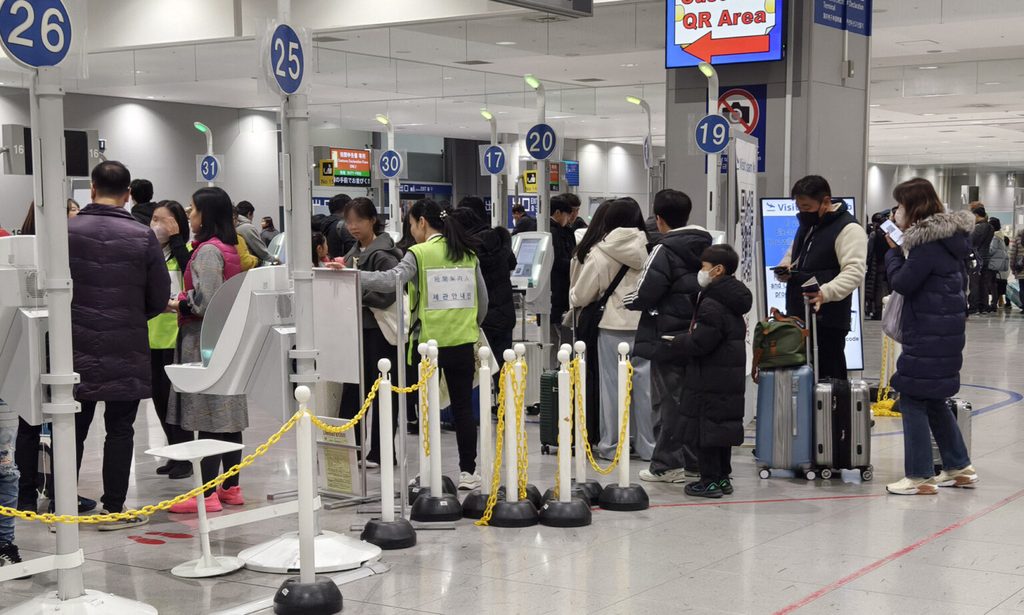
TAIPEI, TAIWAN (MERXWIRE) – According to the latest World Tourism Barometer released by UN Tourism, the global international travel market has fully emerged from the historic shock caused by the COVID-19 pandemic. International tourist arrivals recovered to nearly 99% of pre-pandemic levels in 2024 and officially surpassed their previous record in 2025, reaching 1.52 billion arrivals.
Overall Global Tourism Trends: From Historic Low to New High
Looking back at 2019, before the pandemic began, global international tourist arrivals reached 1.46 billion, up 4.0% from 2018. Despite the cooling global economy and geopolitical factors at the time, the industry recorded its tenth consecutive year of growth. However, due to COVID-19 and border restrictions, 2020 became the worst year in the history of global tourism: international tourist arrivals fell by 74%, with cross-border travel declining by approximately 1 billion trips.
As vaccination became widespread and border controls were gradually lifted, the global tourism industry began a long and significant recovery. This post-pandemic rebound progressed from “partial reopening and severe regional imbalance” to “an explosion of pent-up demand.” At the same time, inflation and changing travel habits contributed to a structural shift in which tourism revenue recovered faster than tourist arrivals.
The post-pandemic recovery of global tourism:
- 2021: Global international tourist arrivals increased slightly from 2020, but remained roughly 1 billion below the 2019 level, representing a decline of about 70% compared with 2019.
- 2022: As countries eased travel restrictions and pent-up demand was released, international tourist arrivals reached approximately 917 million for the year, recovering to about 64% of the 2019 level.
- 2023: The industry saw a strong recovery, with approximately 1.28 billion international trips worldwide, injecting powerful momentum into the global tourism economy and recovering to about 88% of the 2019 level.
- 2024: International tourist arrivals reached 1.4 billion for the year, a recovery rate of 99%. In the same year, international tourism revenue reached US$1.6 trillion, while total export revenues from tourism reached US$2.0 trillion, both setting historical records.
- 2025: International tourist arrivals reached 1.52 billion for the year, showing that global travel demand has successfully returned to a normal growth trajectory after the shock and reached a new historical high.
From the thawing of a frozen market in 2021 to the qualitative transformation and near-full recovery of 2023 and 2024, the global tourism industry finally returned to a growth trajectory in 2025, entering a new phase of growth in both visitor numbers and revenue.
Uneven Global Recovery: Asia-Pacific Hit Hardest, Europe and the Americas Rebound First
According to United Nations data, the global tourism market was highly concentrated before the pandemic in 2019, with Europe and Asia-Pacific serving as its two core pillars. Europe accounted for approximately 743 million arrivals, or just over half of the global market (about 51%); Asia-Pacific followed with about 360 million arrivals (about 25%); the Americas accounted for about 219 million arrivals, or 15%; Africa and the Middle East accounted for 5% (about 71 million arrivals) and 4% (about 61 million arrivals), respectively.
However, the pandemic shock in 2020 completely disrupted the previous market shares. Asia-Pacific was hit first and hardest, with inbound arrivals plunging 84%, making it the most severely affected region in the world. Africa and the Middle East each fell by 75%; Europe declined by 70% despite a brief, modest summer rebound; and the Americas fell by 69%.
In 2021, recovery paces diverged sharply across regions. Europe and the Americas benefited from vaccine passports and summer border reopenings, with arrivals recovering to declines of 62%–63% and around 63% respectively compared with 2019. By contrast, because most Asia-Pacific destinations maintained bans on nonessential travel and strict quarantine policies, arrivals in the region plunged 93%–95% below 2019 levels, leaving its recovery clearly behind.
From 2022 onward, regions entered a recovery phase, though from vastly different starting points. The Middle East showed the strongest rebound, becoming the first region to surpass pre-pandemic levels in 2023 and reaching nearly 100 million arrivals by 2025, 39% above 2019, leading the world. Europe and Africa also surpassed pre-pandemic levels in 2024 and continued to expand, while the Americas maintained steady growth. In contrast, Asia-Pacific continued to catch up, reaching 331 million arrivals in 2025, but because it reopened later, it had not yet returned to its 2019 peak of 360 million arrivals.
Estimated Regional Recovery, 2022–2025 (Baseline Year: 2019)
| Region | 2022 | 2023 | 2024 | 2025 |
|---|---|---|---|---|
| Europe | 585 million arrivals (80% recovery) | Nearly 700 million arrivals (94% recovery) | 747 million arrivals (+1% vs. 2019) | 793 million arrivals (+6% year on year) |
| Asia-Pacific | 86 million arrivals (24% recovery) | 223 million arrivals (62% recovery) | 316 million arrivals (87% recovery) | 331 million arrivals (+6% year on year) |
| Americas | 142 million arrivals (65% recovery) | 193 million arrivals (88% recovery) | 213 million arrivals (97% recovery) | 218 million arrivals (+1% year on year) |
| Middle East | 56 million arrivals (83% recovery) | 73 million arrivals (over 120% recovery) | 95 million arrivals (+32% vs. 2019) | Nearly 100 million arrivals (+39% vs. 2019) |
| Africa | 45 million arrivals (65% recovery) | 65 million arrivals (92% recovery) | 74 million arrivals (+7% vs. 2019) | 81 million arrivals (+8% year on year) |
| World total | 917 million arrivals (63% recovery) | 1.28 billion arrivals (88% recovery) | 1.4 billion arrivals (99% recovery) | 1.52 billion arrivals (new historical high) |
This recovery has reshaped the global tourism map. As the Middle East and Europe set new records and Asia-Pacific accelerates its catch-up, regional recovery timelines are gradually converging, and global travel flows are seeking new regional growth centers.
Arrivals and Tourism Revenue: Asymmetric Recovery and a Volume-Price Divergence
Between 2019 and 2025, the global international tourism market showed a pronounced “volume-price divergence”: the recovery speed and growth of international tourism revenue clearly outpaced the recovery of tourist arrivals. Although both rebounded, their timing and magnitude were not fully synchronized.
This asymmetry ran through the entire post-pandemic period. During the severe volatility and early recovery of 2020–2022, cross-border travel was largely frozen by strict border controls, and global tourism revenue fell sharply. However, as countries gradually reopened in 2022, airfare and accommodation prices rose substantially amid inflation, allowing tourism revenue to rebound first.
In 2023, arrivals recovered to only 88% of the 2019 level (1.28 billion), but tourism revenue had already reached US$1.5 trillion, essentially matching pre-pandemic levels in real terms. By 2024, arrivals had recovered to 99% (1.4 billion), while tourism revenue reached US$1.6 trillion—4% higher than 2019 in real terms—confirming that per-trip spending was growing significantly faster than arrivals. In 2025, both arrivals (1.52 billion) and revenue (US$1.9 trillion) reached new highs, with cumulative revenue growth far exceeding growth in arrivals, making the volume-price divergence a defining feature of this recovery.
International Arrivals and Revenue in Recent Years (Baseline Year: 2019)
| Year | International arrivals | International tourism revenue | Recovery progress and features |
|---|---|---|---|
| 2019 | About 1.46 billion arrivals (pre-pandemic peak) | About US$1.54 trillion | Baseline (100%) |
| 2023 | About 1.28 billion arrivals (88% recovery) | About US$1.5 trillion | Revenue led the real recovery and essentially matched pre-pandemic levels |
| 2024 | About 1.4 billion arrivals (99% recovery) | About US$1.6 trillion (total tourism export revenues of US$2.0 trillion) | Arrivals recovered to 99%; revenue was 4% higher |
| 2025 | About 1.52 billion arrivals (+4% year on year) | US$1.9 trillion | Arrivals surpassed pre-pandemic levels; revenue growth was even more pronounced than in 2019 |
MERXWIRE observers identify two main drivers of this divergence. First, inflation and rising service costs: after the pandemic, inflationary pressure and energy-price volatility led to sharp increases in accommodation, airfare, and dining prices. As a result, even with fewer arrivals, tourism foreign-exchange earnings rose substantially because of higher prices. Second, changing traveler behavior: post-pandemic travelers have shifted toward deeper, more immersive trips. Although they travel abroad less frequently, they stay longer and spend more per trip, raising average spending per visitor and widening the gap between revenue and arrivals.
Structural Change in Tourism: Consumption Patterns and Shifting Regional Shares
The global tourism market has undergone clear structural change since the pandemic. This unprecedented global shock not only reshaped the movement of international travelers but also profoundly altered the industry’s economic model and consumption ecosystem. Although markets rebounded strongly as borders reopened and air routes resumed, the dynamics of recovery differed markedly from the pre-pandemic period, with financial indicators and physical travel flows moving at different speeds.
The most notable phenomenon is “revenue leading arrivals” and “accelerating spending.” Global tourism revenue had already recovered in real terms to nearly US$1.5 trillion in 2023, whereas arrivals did not approach full recovery until the end of 2024. In 2024, total international tourism export revenues reached a record US$2.0 trillion, 4% above 2019 in real terms, showing that growth in spending per trip has significantly outpaced growth in arrivals.
For example, Japan and several popular European destinations have seen tourism revenue reach new highs even before arrivals fully recover. Travelers are taking fewer but more concentrated trips, choosing high-end luxury hotels, local immersive experiences, and longer stays, thereby increasing the value contributed by each visitor.
In addition, regional recovery paces have diverged sharply, reshaping the global market map. Compared with the 2019 concentration around Europe (about 51%) and Asia-Pacific (about 25%), regional market shares in 2025 were markedly different, with strong growth in the Middle East and Europe driving significant shifts in the overall regional structure.
Middle Eastern countries such as Saudi Arabia and the United Arab Emirates have attracted large numbers of high-net-worth international travelers through major national tourism investments under initiatives such as Vision 2030, highly competitive luxury resort development, and simplified e-visa policies. This has driven explosive growth in arrivals and revenue. By contrast, Asia-Pacific has been constrained by slower restoration of international air routes and changing regional business-travel patterns, leading to a reshuffling of its market share.
From Young Travelers to Older Tourists: A Post-Pandemic Shift in Travel Demographics
Over the past five years, the global tourism industry has experienced a historic shock, restructuring, and explosive recovery. Yet even as international visitor flows set new records, geopolitics, global inflation, and generational differences in perceptions of health risks are quietly drawing new dividing lines in airport terminals and at popular attractions.
According to recent observations by UN Tourism and several market research firms, the age structure of global international travelers underwent a significant demographic reshuffling and divergence in spending power between 2020 and 2025. This evolution not only charts the industry’s recovery but also reflects deepening differences among generations in wealth accumulation, work patterns, and family responsibilities.
2020–2022: Younger Generations and Digital Nomads Led the Early Recovery:In the early pandemic and immediately after reopening, international travel became markedly younger. Gen Z and millennials, who generally had lower health anxieties, led the wave of “revenge travel.” Meanwhile, the rise of remote work encouraged many digital nomads aged 20 to 35 to relocate abroad while working and traveling, becoming a core force supporting the early cross-border travel market.
2023–2024: Older Travelers Return Strongly and the “Bucket List” Effect Emerges:As global borders fully reopened, baby boomers and older travelers aged 55 and above returned strongly. This group benefits from stable assets and more available time, making it less sensitive to inflation. With a post-pandemic “enjoy life now” mindset, many accelerated their bucket-list plans, fueling demand for high-value long-haul travel and premium cruises.
2024–2025: Economic Pressure Widens, Squeezing the Sandwich Generation’s Travel Budgets:Inflation and high prices have divided age groups by economic capacity. Younger travelers have become increasingly polarized: higher earners continue traveling long distances, while those newly entering the workforce turn to domestic travel. Meanwhile, the 35–54 “sandwich generation,” which supports both children and elderly parents, has been forced to scale back family trips abroad or trade down because of soaring airfare and accommodation costs.
The changing age structure sends a clear signal to the global tourism industry: travel is no longer a uniform consumer behavior but an increasingly segmented market. Operators must offer distinctive, high-value customized experiences for wealthy older travelers and affluent professionals with fewer financial constraints. At the same time, they must develop highly cost-effective and flexible travel options for the sandwich generation and budget-conscious travelers who face financial pressure but still seek opportunities to recharge.
A New Global Tourism Competition: Future Outlook and Challenges
The global tourism market’s journey from its lowest point to a strong rebound marks the industry’s entry into a new development cycle after profound disruption. From the deep winter of 2020, when arrivals fell by more than 70%, to the return to 1.4 billion arrivals in 2024 and a record 1.52 billion in 2025, the data clearly demonstrate the resilient and essential nature of international mobility. Viewed more broadly, however, this recovery is not simply a return to the old track; it represents a deep structural reshuffling and a paradigm shift in the industry’s economic model.
Amid this reshaping of the tourism map, international tourism revenue has climbed to a new high of US$1.9 trillion, revealing that spending growth has significantly outpaced growth in arrivals. Meanwhile, the Middle East has led the world with growth nearly 40% above pre-pandemic levels, while divergent regional recovery paces have disrupted the former market balance. This means the tourism industry has shifted from a quantity-driven competition focused on expanding total visitor numbers to a quality-driven competition centered on per-visitor value and regional attractiveness.
Beyond changing consumption behavior and regional market shares, the pace of supply-side recovery and operational constraints are also key factors shaping the global tourism market. The pandemic severely damaged tourism supply chains, from airline fleet scheduling and airport ground-service capacity to staffing shortages at hotels and destination-management companies. These issues became acute when post-pandemic demand surged. Although operators continue to restore capacity and hire staff, high rerouting costs caused by geopolitical tensions and widespread frontline labor shortages in the global hospitality sector continue to raise operating costs and limit service capacity at popular destinations.
At the same time, as international arrivals return to record highs, the carrying capacity of popular destinations and the pressure to pursue sustainable transformation have come back into focus. The environmental burden and impact on residents’ quality of life caused by overtourism are prompting governments to rethink policy: rather than simply maximizing visitor numbers, they are using institutional measures to manage visitor volumes and service quality.
For example, Venice, Italy, formally launched a trial “access fee” for day-trippers in 2024. In the same year, Kyoto and attractions around Mount Fuji in Japan introduced visitor-flow management and access restrictions at crowded sites. These changes show that destination management has fundamentally changed in the post-pandemic era. Balancing tourism’s economic benefits with residents’ quality of life will become an unavoidable benchmark for the global travel industry.
Looking ahead from this new high, whether the market can convert its rebound momentum into long-term sustainable growth will depend on several key indicators. The first is whether high-value, longer-stay travel becomes a durable habit after high inflation and airfares ease. The second is whether emerging markets such as the Middle East can sustain their operational momentum after explosive growth. The third is whether Asia-Pacific can break through its 360-million-arrival peak after 2026 and reshape the global market map. These interacting dynamics—consumer psychology, regional policies, and macroeconomic conditions—will be central to determining the final shape of the global tourism industry in the post-pandemic era.
More News

Top Singapore law firm fined for data breach affecting 143,756 people
Singapore's data regulator has fined Rajah & Tann, one of the city-state's largest law firms, S$247,000 (US$191,000) over a 2023 breach in which the personal data of up to 143,756 people was stolen.

From 30pct to zero: Former exco, NGO lament current N Sembilan all-male exco team
Women's views deserve representation at decision-making level, Tan says.

Christmas 2026 on a budget: Here are 10 unisex gifts under P1,000
Looking for Christmas presents that are thoughtful, practical, and budget-friendly? You don't have to spend a fortune to make your loved ones feel special this holiday season.

Groups urge Congress to further increase education budget for 2027
MANILA, Philippines — A national coalition on Friday called on Congress to further increase the proposed government budget for education in 2027 as both chambers prepare for bicam. E-Net Philippines made the pronouncement after the Nov. 24 Senate plenary deliberations where senators called for increased funding for education. READ: Senate approves ₱915.4B DepEd budget for

Pia Cayetano flags risks of ‘flavored air,’ energy drinks to youth
MANILA, Philippines — Sen. Pia Cayetano on Friday raised concerns over the marketing of so-called “flavored air” products and highly caffeinated energy drinks, warning that these could pose health risks to young people. Cayetano raised the concerns during the Senate’s deliberations on the proposed 2027 budget of the Department of Health (DOH) and its attached

Sotto urges DICT to crack down on online sale of abortion drugs
MANILA, Philippines – Senate President Pro Tempore Vicente “Tito” Sotto III on Friday urged the Department of Information and Communications Technology (DICT) to crack down on social media pages or groups selling abortifacients and promoting abortion. Abortifacients are substances or drugs used to induce an abortion or terminate a pregnancy. “There are groups on Facebook

Nov. 27 lotto results: Lone bettor wins ₱44.2M jackpot
MANILA, Philippines—A lone bettor won the ₱44.2 million Mega Lotto 6/45 jackpot on Friday, Nov. 27, while no player won the ₱603.58 million Ultra Lotto 6/58 top prize. According to the Philippine Charity Sweepstakes Office (PCSO), the winning combination for Mega Lotto 6/45 was 33-37-36-26-23-03. READ: Lotto Results Today – November 27, 2026 Meanwhile, no

Legarda urges LGUs to set up free public cooling centers for El Niño
MANILA, Philippines — Sen. Loren Legarda is urging local government units (LGUs) to open free public cooling centers in barangay halls and other accessible community facilities, and partner with shopping malls to provide relief from dangerous heat as a very strong El Niño threatens the health of vulnerable Filipinos. The proposal forms the sixth point of

SPD says driver who fell from Makati building only a reliever
MANILA, Philippines — The 55-year-old driver who fell from a fourth floor parking building along Jimenez Street in Barangay San Lorenzo, Makati City was only a reliever the day of the incident, the Southern Police District (SPD) disclosed. SPD Public Information Officer PLt. Margaret Panaga said that the driver picked up the vehicle parked inside

Manila Water sets desludging schedule for a cleaner holiday season
MANILA, Philippines —Manila Water releases its December desludging schedule for selected barangays in the East Zone of Metro Manila and Rizal, helping households maintain properly functioning septic tanks during the holiday season. The water and wastewater service provider is encouraging customers in scheduled areas to avail of the service before their septic tanks reach full

VP Sara: “Painful small talk” with senators during Senate visit
MANILA, Philippines — Vice President Sara Duterte on Friday shared that she had a “painful small talk” with senators when she went to the Senate on Thursday, emphasizing that being two-faced is a politicians’ national sport. This was the response of Duterte when she was asked about her visit to the Senate for the plenary
Road closures in Manila on Saturday, Nov. 28
MANILA, Philippines — Several roads will be closed in the city of Manila starting Saturday evening, Nov. 28, ahead of a road running event.According to the Manila Public Information Office, the following roads will be closed from 9 p.m. onwards on Saturday due to the AIA Rock and Roll Series Manila on Sunday, Nov. 29:
YOUR NEWS, OUR NETWORK.
Do you have Great News you want to tell the world?
Be it updates about your business or your community, you can make sure that it’s heard by submitting your story to our network reaching hundreds of news sites across 6 verticals.