
Lee Lorenzen on the Future of Cellular Hydration Science
Oct 3, 2026

Rancho Santa Margarita researcher Lee Lorenzen says hydration science is shifting beyond water quantity and toward understanding how water behaves at the cellular level.
Rancho Santa Margarita, California Oct 3, 2026 (Issuewire.com) - For years, hydration advice has followed a simple formula: drink more water. But according to researcher and inventor Lee Lorenzen, the future of hydration science may depend less on volume and more on how water functions within the body.
Lorenzen, founder and CEO of Cluster Solutions, has spent decades studying water structure and cellular hydration. His work focuses on how water molecules organize and how that organization may influence hydration efficiency, nutrient transport, and biological activity at the cellular level.
"Hydration research is becoming much more detailed," Lorenzen says. "Researchers are no longer only asking how much water people drink. They're asking how water behaves once it enters biological systems."
Recent advances in molecular biology and imaging technology are helping drive that shift. Researchers can now study water interactions around proteins, membranes, and cells with far greater precision than in previous decades. Technologies such as cryo-electron microscopy, fluorescence spectroscopy, and molecular imaging systems are giving scientists a closer look at how water behaves inside living tissue.
According to the U.S. Geological Survey, the average adult human body is approximately 60% water, while the brain and heart contain closer to 73% water. Despite water's central role in biology, many aspects of cellular hydration remain under active study.
One area attracting growing interest involves water organization near biological surfaces. Researchers studying structured or interfacial water are examining how water molecules behave differently near proteins, DNA, and cell membranes compared to bulk liquid water.
"Inside cells, water is not necessarily behaving the same way it behaves in a glass," Lorenzen explains. "That difference is becoming increasingly important in modern hydration research."
Scientists are also studying aquaporins, microscopic proteins that regulate water movement across cell membranes. The discovery of aquaporins earned scientist Peter Agre the Nobel Prize in Chemistry in 2003 and helped reshape scientific understanding of how carefully the body manages water transport.
"These discoveries show that hydration is a highly controlled biological process," Lorenzen says. "The body is constantly regulating how water moves, where it moves, and how cells use it."
The growing interest in hydration science is also influencing the wellness industry. According to Grand View Research, the global functional water market exceeded $14 billion USD in 2022 and continues to expand as consumers look for new approaches to hydration and wellness support.
Lorenzen believes newer technologies will continue pushing hydration science into more advanced areas of study over the next decade.
"As imaging tools improve, researchers are able to study molecular behavior that was difficult to observe thirty years ago," he says. "That creates opportunities to revisit questions that were previously hard to answer clearly."
At the same time, Lorenzen stresses the importance of balancing curiosity with scientific discipline.
"There should always be skepticism in science," he says. "The goal is not to jump to conclusions. The goal is to keep asking better questions and continue testing ideas carefully."
Lorenzen's interest in hydration science began decades ago, rooted in his background in biology, pharmacology, and biomedical consulting. Over time, his work evolved toward studying water structure and developing clustered-water technologies designed to stabilize smaller molecular groupings of water.
Today, he continues working with physicians, researchers, and technical advisers while monitoring developments in molecular biology and hydration science.
"The more researchers learn about cellular behavior," Lorenzen says, "the more they realize hydration is more complex than people once believed."
As scientific tools continue to improve, Lorenzen expects hydration research to move further away from simple intake measurements and closer to understanding efficiency, transport, and molecular interactions within living systems.
"Water is involved in nearly every biological process," he says. "We are still learning how much there is left to understand."
About Lee Lorenzen
Lee Lorenzen is the founder and CEO of Cluster Solutions, a research and development company focused on clustered water technology and hydration science. With a background in biology and pharmacology, Lorenzen has spent decades researching water structure, molecular organization, and cellular hydration. He holds multiple U.S. patents related to clustered water processes and continues collaborating with researchers and physicians studying biological water behavior. Lorenzen is based in Rancho Santa Margarita, California.
Source :Lee Lorenzen
This article was originally published by IssueWire. Read the original article here.
More News

Weekly Leo Horoscope for Oct. 12-18, 2026
Leo, the astrology for the week of Oct. 12-18, 2026 could see a change at home affecting the plans you"ve been making for yourself.

SPECIAL COVERAGE: Impeachment trial of Sara Duterte
Rappler brings live updates, analysis, and commentary from reporters and experts as the historic impeachment trial unfolds
Weekly Cancer Horoscope for Oct. 12-18, 2026
Cancer, your horoscope forecast for Oct.12-18 is on reimbursements. It may be worth following up on.

COMMENT | Our children should not have to survive school
We must develop effective preventive measures to keep children safe.
Weekly Gemini Horoscope for Oct. 12-18, 2026
Gemini, your astrology forecast this week Oct. 12-18, 2026 says you shouldn't keep guessing what"s important
Weekly Taurus Horoscope for Oct. 12-18, 2026
This week's astrology forecast for Taurus: An old disagreement with a partner or family member may come up again, particularly about privacy or how things are handled at home.
Weekly Aries Horoscope for Oct. 12-18, 2026
For the week of Oct. 12-18, 2026, Aries may be eager to move forward with a romance, spend time with your children or pursue a creative project

Iran says US response to its proposal to reopen Hormuz ‘insufficient’
Iran is 'no longer in the process of responding to the Americans,' says Iran's security chief
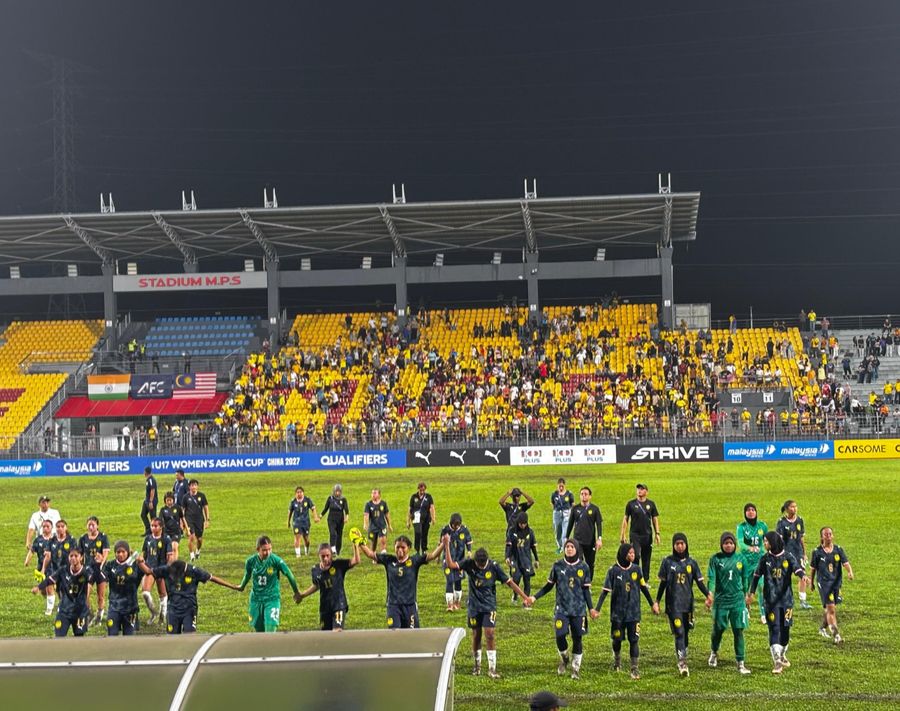
'Keep your head up high': Gutsy Malayan Tigress fall to India
The U-17 girls' team was unable to retaliate against India's dominant display.
Your horoscopes for Oct. 12-18, 2026: What could you change before 2026 ends?
This week's horoscope brings opportunities to step up. On Oct. 15, the Sun in Libra sextiles Jupiter in Leo, favoring recognition and support. But having the confidence to take that bigger step isn"t enough. Mars in Leo trines Saturn retrograde in Aries on Oct. 16 and Pluto also turns direct in Aquarius on Oct. 16.

Saudi Arabia reports injuries in new attack at Riyadh airport, day after strike kills 13
The situation results in travel warnings from the UK and US, while Saudi Arabia continues military operations in Yemen, with the Houthis threatening further escalation

DBM rules for 2028 budget require reasons for shelving local projects
National government agencies must explain why they reject, delay or modify regional development projects under new guidelines for preparing the proposed 2028 national budget, a move aimed at making spending decisions more transparent and responsive to local needs. The Department of Budget and Management (DBM) said on Sunday the rules would require agencies to report
YOUR NEWS, OUR NETWORK.
Do you have Great News you want to tell the world?
Be it updates about your business or your community, you can make sure that it’s heard by submitting your story to our network reaching hundreds of news sites across 6 verticals.